
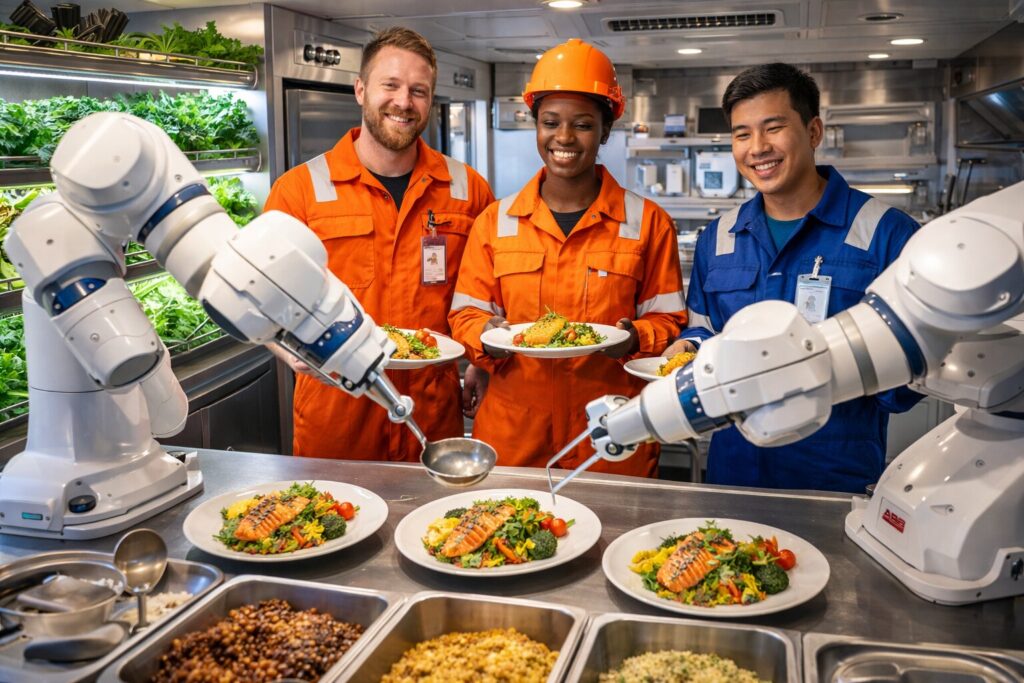
Offshore catering has evolved dramatically by 2026, prioritizing sustainability through vertical farms and drone deliveries that cut food miles by 80%. Containerized hydroponic units on support vessels grow leafy greens and herbs onsite, harvesting 12 crops per cycle with 95% less water than soil farming. AI platforms forecast demand based on crew manifests and weather-induced appetites, minimizing overstock waste to under 5%. Biometric scanners in galleys tailor meals—high-electrolyte for hot climates, carb-heavy for night shifts—improving health metrics like BMI stability by 18%. Packaging shifts to mycelium-based compostables, dissolving in saltwater without microplastic traces, compliant with 2026 OSPAR protocols.
Nutritional and Cultural Innovations
Menus now feature lab-grown proteins and algae-derived omegas, matching beef nutrition at 10% environmental cost. Cyclic 28-day rotations prevent palate fatigue, with 3D printers customizing textures for dysphagia cases common in aging crews. Multicultural adaptations include spice-level AI adjustments for 50+ nationalities, boosting satisfaction surveys 28%. Water systems purify condensate to potable standards, yielding 500 liters daily per 100-man crews. Studies link these regimens to 22% fewer medical evacuations, saving $2M annually per platform. Robotic sous-vide stations ensure pathogen-free prep in humid 40°C galleys.
Economic Viability and Scalability
Costs have plummeted 15% via bulk hydroponics, with ROI from reduced reshuffles—drones evade helicopter bans, delivering 200kg payloads in 30 minutes. Blockchain traces allergens end-to-end, averting liability claims. Scaling to mega-farms on FPSOs supports 1,000+ personnel, integrating with energy co-ops for surplus power. Future includes gene-edited superfoods resilient to salinity spikes. In India, ONGC pilots yield 30% waste cuts, positioning sustainable catering as a competitive edge in talent wars.